Guidance: which linear guide?
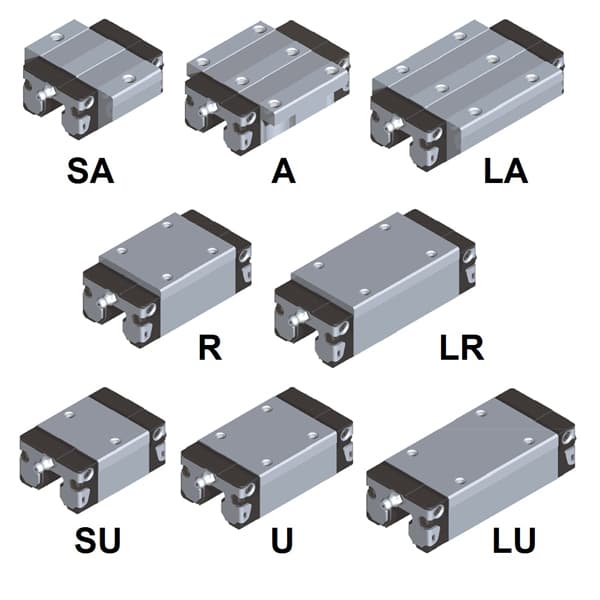
- Profile rail guides use carriages with recirculating balls on a precision-ground rail. They carry high loads and moments with high stiffness and accuracy, which suits CNC machines, automation and robotics.
- Shaft guides (linear ball bearings on round shafts) tolerate more misalignment and cost less. They are a good choice for lighter loads, longer unsupported spans and less critical accuracy.
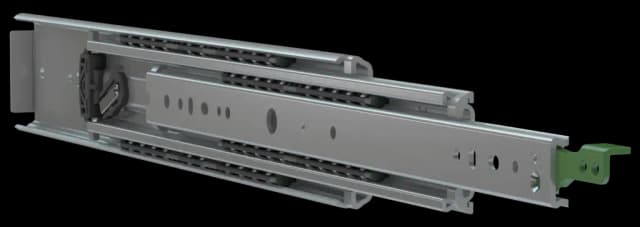
- Precision rail guides have a cage of rolling elements between two rails. They give very smooth, accurate travel over limited strokes, for measuring and optical equipment.
What to check
- Loads and moments in every direction, including the overhung weight of tools or arms.
- Accuracy and preload class. Higher preload means more stiffness but more friction.
- Carriage type: flanged carriages mount from above or below, block types mount from above.
- Environment: seals and scrapers keep out dust and chips. Corrosion-resistant versions suit wash-down areas.
- Life and lubrication: calculate the rated life from your load and stroke, and plan the re-lubrication interval.
Drive: ball screw or roller screw?
Ball screws turn motor rotation into precise linear motion with high efficiency. Rolled ball screws are economical and accurate enough for most automation. Ground screws offer the tightest lead accuracy for machine tools. Lead accuracy is graded in classes (for example G9, G7 and G5 to ISO 3408), and preloaded nuts remove backlash.
On long screws, check the critical speed and buckling load, which limit how fast and how hard a slender screw can be driven.
Planetary roller screws carry much higher loads and last longer than ball screws of the same size. They suit presses, injection moulding and heavy electromechanical cylinders that replace hydraulics.
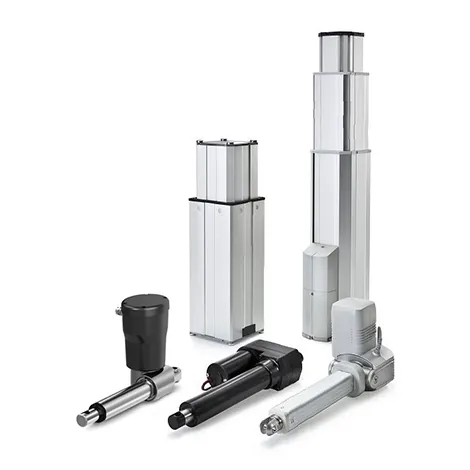
Or choose a complete electric actuator
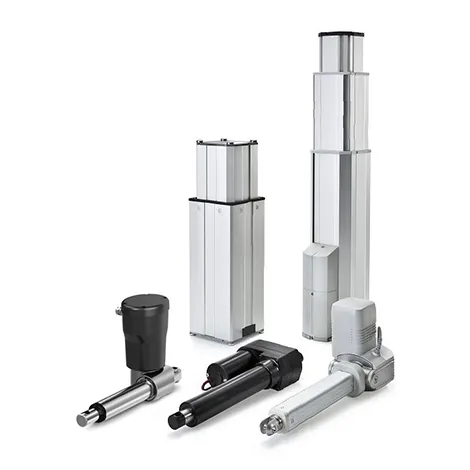
An electric linear actuator combines the motor, gearbox, screw and housing in one unit, which saves design time. Size it from:
- Force: the push and pull load, including friction and acceleration.
- Stroke and speed: faster actuators deliver less force for the same motor.
- Duty cycle: how long it runs compared with how long it rests. Exceeding it overheats the motor.
- Supply voltage, IP rating and feedback: limit switches, potentiometers or encoders for position control.
For sit-stand desks, medical beds and ergonomic workstations, lifting columns and ready-made lifting kits combine guidance, drive and control in a single package.
What to send us for a quote
Send the load and its position, the stroke, the speed or cycle time, the accuracy you need, the duty cycle and the environment. A sketch of the axis is the fastest way for our team to recommend a guide, screw or actuator.
Frequently asked questions
What is the difference between a rolled and a ground ball screw?
Rolled ball screws are formed by cold rolling, which makes them economical with good accuracy. Ground ball screws are precision-ground for the highest lead accuracy and smoothest motion, at a higher price.
What does preload mean on a linear guide?
Preload removes the internal clearance between the carriage and the rail, which makes the guide stiffer and more accurate. Higher preload increases friction and slightly reduces life, so choose the lowest preload that meets your stiffness needs.
What is an actuator duty cycle?
The duty cycle is the share of time an actuator can run compared with its total cycle time, for example 20% means 2 minutes of running in every 10. Running beyond it can overheat the motor.